Explore the Park
The John and Mary Pappajohn Sculpture Park features artwork by more than two dozen of the world’s most celebrated artists.
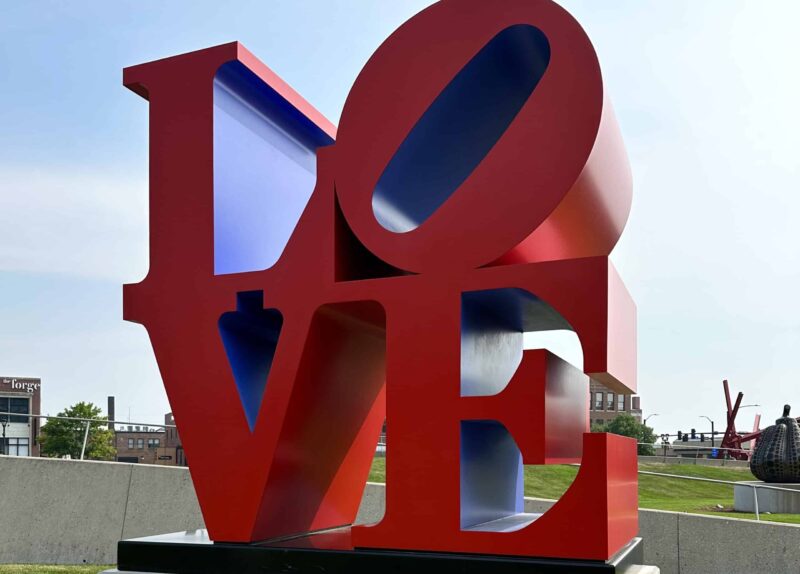
This beautiful setting located in the heart of Des Moines is the perfect place to discover, reflect, rest, and socialize.
The John and Mary Pappajohn Sculpture Park opened in 2009. A partnership between the Art Center and the City of Des Moines, the park is an urban oasis located on 4.4 acres in Western Gateway Park, near downtown, with easy access to other amenities and attractions. It is home to dozens of monumental sculptures by artists from around the world, all of them donated by philanthropists John and Mary Pappajohn.
The surrounding landscape of concrete pathways, trees, and gently rolling hills was designed by Diana Agrest, Mario Gandelsonas, and RDG Planning and Design. Since its founding, the park has become a landmark, a gathering place, and a point of civic pride for both the city and the state.
The Pappajohn Sculpture Park is located at 1330 Grand Avenue in downtown Des Moines.
The park is open during city park hours — sunrise to midnight.
Ample metered street parking is available surrounding the park, as well as several accessible parking spots and nearby parking garages. The park is accessible by bike via the bike lanes on Grand Avenue. To plan your trip via public transportation, visit the DART trip planner.
Take a virtual tour!
Discover the Pappajohn Sculpture Park in this unique video tour. See each artwork from every angle and learn more about the works and the artists who they’re from. Use the video chapters to view your favorite work!
Park Guidelines

Photography
Photography is allowed in the sculpture park. Media requests for photographs can be made via e-mail or by calling 515-271-0344.

Preservation
Touching, climbing, and sitting on the sculptures is not allowed, with the exception of Scott Burton’s Seating for Eight. Although many of the sculptures appear sturdy and durable, touching or climbing will damage the sculptures and their finish. Additionally, visitors may get hurt touching or climbing on the sculptures.

Food & Drink
Picnicking is allowed. Please be sure to keep food and drink away from the sculptures and dispose of waste in the receptacles on the perimeter of the park. City park rules prohibit glass bottles and alcohol is allowed by permit only.

Smoking
Smoking inside the sculpture park is prohibited. Smoking is permitted on the exterior public right of way sidewalks.
Get the most from your Sculpture Park visit!
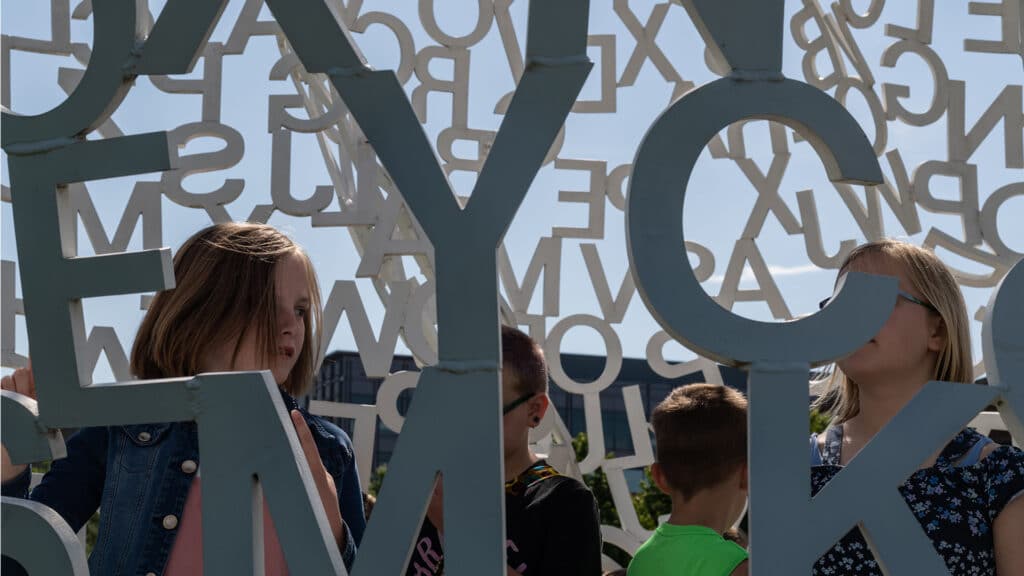
The Sculpture Park Exploration Guide was designed for educators, parents, grandparents, guardians, families, friends, and all ages to interact with the sculptures and one another as a group. It offers activities and various ways of engaging with 11 works of art in the Sculpture Park.
Print Your Own Guide & Go!
The Des Moines Art Center does not provide copies of the Sculpture Park Exploration Guide. Please provide a copy for the leader of your group ahead of time.
Activities for Groups
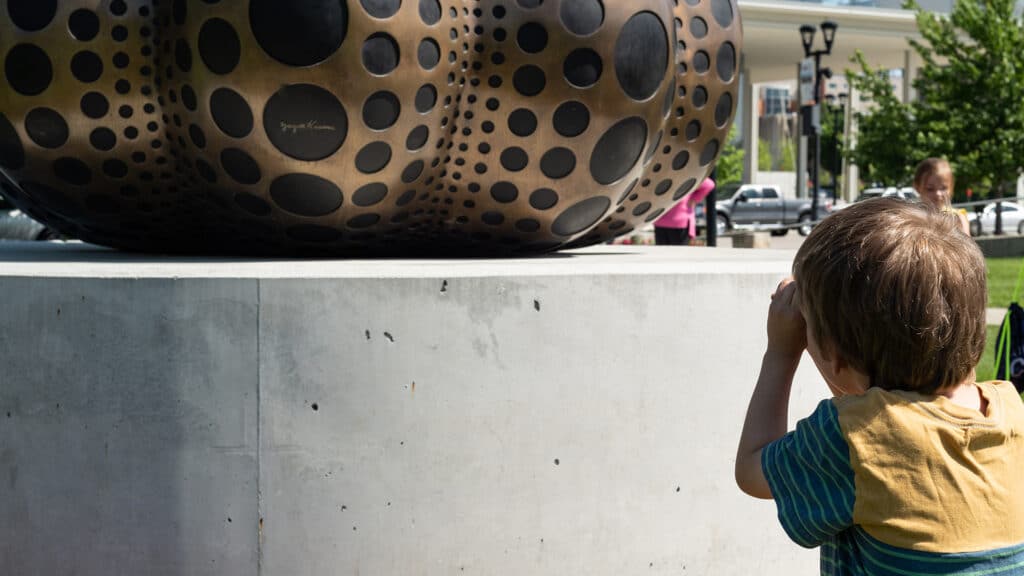
Activities are for groups of 15 people or less. Groups may not have enough time to do all activities during one visit. Please select your favorite interactive prompts. The activities in the guide need no materials other than a camera, if applicable.
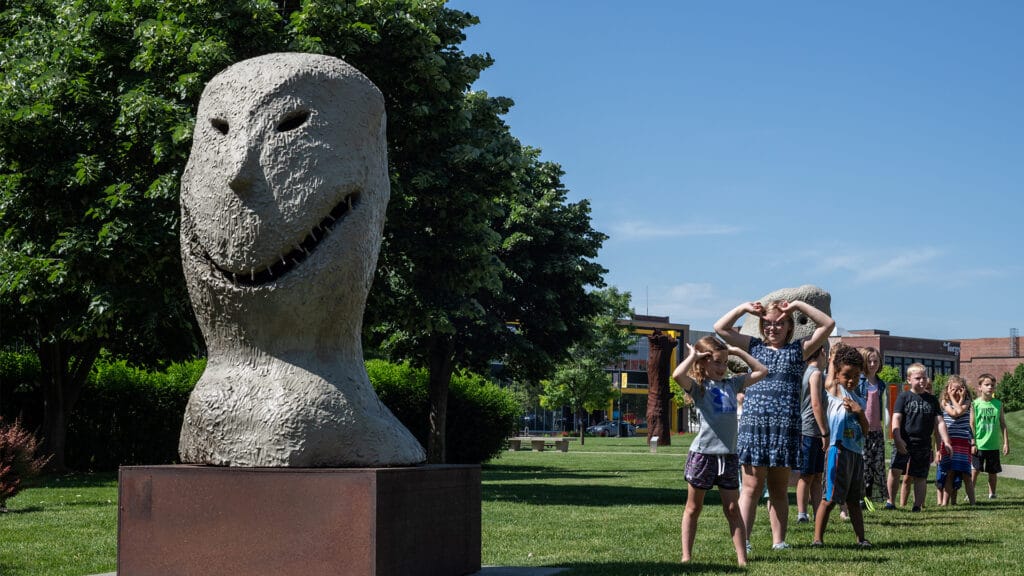
Sculpture Locations
The sculptures are located on a map at the end of the guide for easier navigation. The numbers located on the map correspond to the sculptures in the guide.
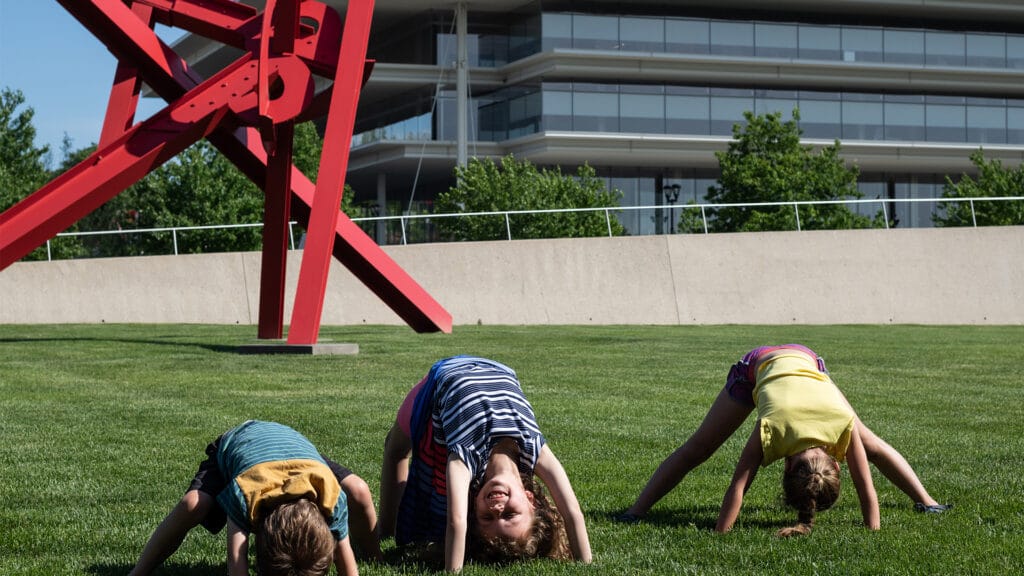
Something for Everyone
There are seven symbols that represent the various ways people learn (auditory, creative, emotional, etc.). For example, if you have a child that prefers learning through movement, look for the physical icon.